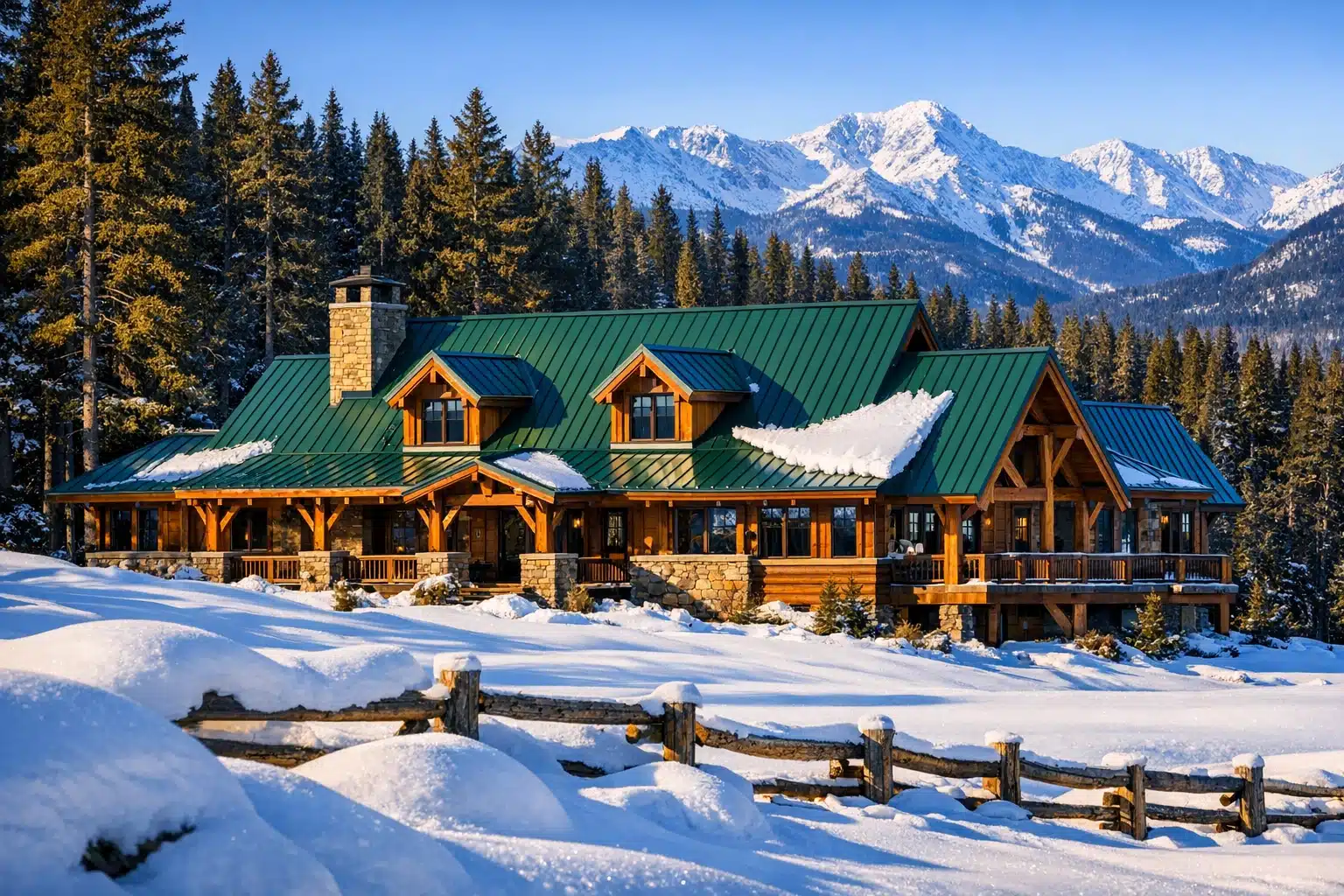
 Artificially generated image
 Metal Roof
A roof does more than keep rain outside; it shapes comfort, maintenance demands, and long-term home value. Metal roof systems are drawing attention because they combine durability with clean design and improving energy performance. Yet the topic can feel crowded with product names, gauges, coatings, and installer claims. This guide breaks the subject into practical choices so you can compare options with a sharper eye and decide what truly fits your home.
Outline
- Why metal roofs matter and how they compare with familiar roofing materials
- Materials, panel profiles, sizing choices, and what affects fit on a real structure
- How pricing works, what drives costs, and why long-term value matters
- Installation basics and what to look for when selecting a qualified contractor
- Maintenance, energy performance, lifespan, and final guidance for homeowners
1. Why Metal Roofs Have Become a Serious Option for Modern Homes
Interest in metal roofing has expanded far beyond barns, workshops, and industrial buildings. Today it appears on suburban homes, cabins, coastal properties, modern farmhouses, and even historic renovations where owners want a roof that lasts longer than many conventional alternatives. Part of that appeal comes from longevity. Depending on the material, finish, local climate, and installation quality, a well-built metal roof can often remain serviceable for several decades. That does not mean every system performs the same way, but it does explain why more homeowners see the roof not as a short-cycle replacement item, but as a structural investment that changes the maintenance rhythm of the house.
Another reason for the growing interest is resilience. Metal surfaces can shed rain and snow efficiently, and many assemblies are designed to resist wind uplift better than aging asphalt systems. Fire resistance is also an important consideration in some regions, especially where wildfires or stray embers are a real concern. Weight matters too. Many metal products are lighter than tile or slate, which can make them attractive for remodels where the structure is sound but not intended for very heavy roofing materials. In visual terms, the category is also much broader than many people assume. A metal roof can look crisp and contemporary, quietly agricultural, or surprisingly traditional depending on profile, seam style, color, and trim details.
Of course, a durable material does not automatically make every project a smart one. Roof slope, attic ventilation, underlayment, flashing details, local code requirements, and installer skill still determine real-world performance. Noise is another topic that often comes up. The old image of a loud tin roof in a storm survives in popular memory, but modern residential systems usually include roof decking, insulation, and underlayment layers that change the sound dramatically. For many houses, the perceived difference indoors is smaller than expected. The real lesson is simple: a metal roof is neither a miracle product nor a niche curiosity. It is a mature roofing option that rewards careful planning and tends to perform best when owners understand what problems they are trying to solve, whether those are lifespan, weather resistance, lower maintenance, or a cleaner architectural look.
2. Materials, Profiles, and Sizing Decisions That Shape Performance
Choosing a metal roof starts with understanding that the category includes several distinct materials. Steel is common because it balances strength, availability, and cost. Aluminum is often favored near saltwater because it resists corrosion well, though it is typically softer than steel. Copper and zinc occupy a more premium tier and develop distinct surface character over time, making them appealing for certain architectural styles. Beyond the metal itself, the panel profile has a major impact on appearance and function. Standing seam systems hide many fasteners and offer a cleaner look, while corrugated or ribbed panels can be more budget-friendly and visually bold. Metal shingles and stamped panels aim to imitate traditional roof shapes while keeping some of the advantages of metal construction.
Size is not a small detail tucked into a spec sheet. It affects installation efficiency, waste, expansion behavior, handling, and the finished appearance across the roof plane. Buyers sometimes search for a metal roofing size guide as if there were one universal answer, but panel dimensions are tied to roof geometry, deck condition, climate, wind zone, and crew experience. A longer panel can reduce horizontal seams, yet extremely long lengths may be harder to transport and manage without damage. Wider coverage can speed installation, but it may interact differently with thermal movement and fastening patterns. Even trim proportions matter, because an elegant field of panels can look awkward if ridge caps, eaves, and gable details are poorly scaled.
Several technical variables deserve attention before a final choice is made:
- Gauge or thickness, which influences rigidity and dent resistance
- Paint finish and coating system, which affect weathering and fade performance
- Concealed-fastener versus exposed-fastener design
- Minimum slope requirements for the selected panel type
- Compatibility with underlayment, insulation strategy, and ventilation design
In practical terms, profile selection is a conversation between architecture and engineering. A low-slope modern home may benefit from standing seam panels with carefully planned flashing transitions. A rural outbuilding may perform perfectly well with exposed-fastener panels if detailing and maintenance are handled correctly. Homeowners should also think about how the roof interacts with gutters, skylights, chimneys, solar equipment, and snow retention devices. When all these elements are discussed early, the roof stops being a simple material purchase and becomes a coordinated exterior system. That perspective usually leads to better durability, fewer surprises during installation, and a result that looks intentional rather than improvised.
3. Understanding Price Drivers, Lifecycle Value, and Budget Trade-Offs
Online searches for metal roofing prices can be useful, but they often create the wrong expectation. Simple price ranges rarely capture the true complexity of a roof. The number that matters on a real estimate is shaped by material type, panel profile, gauge, finish, roof pitch, valley count, trim detail, tear-off labor, underlayment upgrades, and local labor rates. A small, uncomplicated gable roof is fundamentally different from a steep roof cut by dormers, skylights, chimneys, and intersecting ridges. In both cases the surface material may look similar on paper, yet labor time and waste percentages can move the budget significantly.
The same caution applies to metal roofing cost comparisons. A homeowner might compare a premium standing seam proposal with a basic asphalt quote and conclude that metal is simply too expensive. That conclusion can be incomplete if it ignores lifespan, repaint cycles, repair frequency, storm performance, and the possibility of avoiding one or two future replacements. Cost should be read on at least two levels: upfront installation cost and cost over the expected service life of the house. A more expensive roof is not automatically the better value, but a cheaper roof is not automatically the smarter purchase either.
Several factors commonly push budgets up or down:
- Material choice, such as steel versus aluminum versus copper
- Panel design, including standing seam, corrugated panels, or stamped products
- Roof complexity, especially penetrations, hips, valleys, and changes in pitch
- Removal of old roofing and disposal fees
- Accessory components like snow guards, upgraded flashing, and ventilation work
There is also the question of energy behavior. Reflective coatings and lighter finishes may help reduce heat absorption in some climates, especially when the roof assembly is paired with good insulation and ventilation. That benefit varies by region and house design, so it should be viewed as a possible operating advantage, not a guaranteed utility revolution. The best budgeting approach is to ask contractors for transparent line items and then compare scope, not just total price. Two bids with the same number can represent very different products. When evaluating proposals, homeowners should look for a full description of underlayment, fasteners, trim, flashing, workmanship coverage, and any decking repairs that could be excluded. Clear scope language turns the conversation from guesswork into a grounded financial decision, which is exactly where roofing discussions belong.
4. Installation Quality and How to Evaluate a Metal Roofing Contractor
A roof can be made from excellent materials and still disappoint if the installation is rushed or poorly detailed. That is why choosing the right metal roofing company matters almost as much as choosing the panel itself. Roofing failures often begin at transitions rather than in the middle of the field: valleys, ridges, skylights, sidewalls, chimneys, plumbing penetrations, and eaves are where water management either succeeds quietly or starts creating long-term trouble. A reliable contractor understands these details, explains them clearly, and does not treat trim and flashing as afterthoughts. Good workmanship is visible not only in finished lines but in the planning that happens before the first panel reaches the roof.
The installation process usually starts with measurement, inspection of the existing deck, and confirmation of local code requirements. From there, the crew addresses tear-off or preparation, installs underlayment, sets flashings and edge details, then places panels according to the system design. Fastener placement, seam alignment, allowances for thermal movement, and careful treatment of penetrations are all critical. Unlike some roofing materials that can hide minor inconsistencies, metal tends to reveal mistakes through waviness, oil canning, leaks, or noisy movement when temperatures change. Precision is not cosmetic vanity here; it is a practical requirement.
When interviewing contractors, homeowners should ask focused questions rather than broad ones. Useful prompts include:
- What metal system do you recommend for this roof shape and climate, and why?
- Who manufactures the panels and trims, and are they part of the same tested system?
- How do you handle flashing around chimneys, skylights, and wall intersections?
- What workmanship warranty do you provide, and what does it exclude?
- Can you show recent projects with similar roof geometry?
Communication style also matters. A contractor who can explain ventilation, substrate condition, and moisture control in plain language is often easier to work with when unexpected conditions appear. Homeowners should be cautious around vague promises, unusually low bids, or resistance to written scope descriptions. It is wise to verify licensing requirements where applicable, request proof of insurance, and check whether the proposed crew regularly installs the exact system being quoted. The goal is not to find a salesperson with the smoothest pitch. It is to find a professional team that understands the roof as a full assembly, respects manufacturer instructions, and can deliver tidy details that hold up after the first storm, the fifth winter, and the fifteenth summer.
5. What Homeowners Should Remember About Maintenance, Performance, and Long-Term Value
One of the most attractive aspects of a metal roof is the expectation of lower maintenance, but low maintenance is not the same as no maintenance. Leaves can gather in valleys, sealants can age, fasteners on certain systems may need inspection, and flashing points should be checked periodically after severe weather. Branches rubbing across the surface can wear finishes over time, and debris that traps moisture should not be ignored. The good news is that routine care is usually straightforward. A roof inspection after storms, basic gutter cleaning, and early attention to small issues can preserve both appearance and performance. The roof does not need constant fussing, but it does benefit from informed ownership.
Long-term value also includes comfort and aesthetics. A well-chosen roof color can sharpen the entire exterior of a house, while the right profile can help the building feel more settled in its setting. On a wooded lot, a matte dark finish may feel grounded and quiet. In a hot, bright climate, a lighter reflective finish may make more visual and functional sense. These are not trivial choices. Because the roof occupies such a large portion of the exterior envelope, it influences curb appeal more than many owners expect. It also affects resale conversations, especially when buyers see a newer roof as a sign of reduced near-term maintenance risk.
For homeowners, renovators, and self-builders, the most useful conclusion is this: choose the roof system with the house in mind, not the trend in mind. Consider climate, structure, budget horizon, appearance, maintenance tolerance, and contractor quality as one linked decision. A cheaper panel installed carelessly can be a false economy. A premium system on the wrong house can be overkill. The best result usually comes from balanced thinking:
- Match the material to environmental exposure
- Match the profile to the architecture and slope
- Match the budget to lifecycle expectations, not just first payment
- Match the installer to the system, not just the sales pitch
If you are considering a metal roof, move slowly enough to compare details, but not so slowly that every brochure starts to sound the same. Ask better questions, look closely at scope, and think beyond the moment of installation. A roof is a quiet piece of infrastructure. When it is chosen well, it rarely demands attention, and that may be the strongest endorsement any homeowner could want.