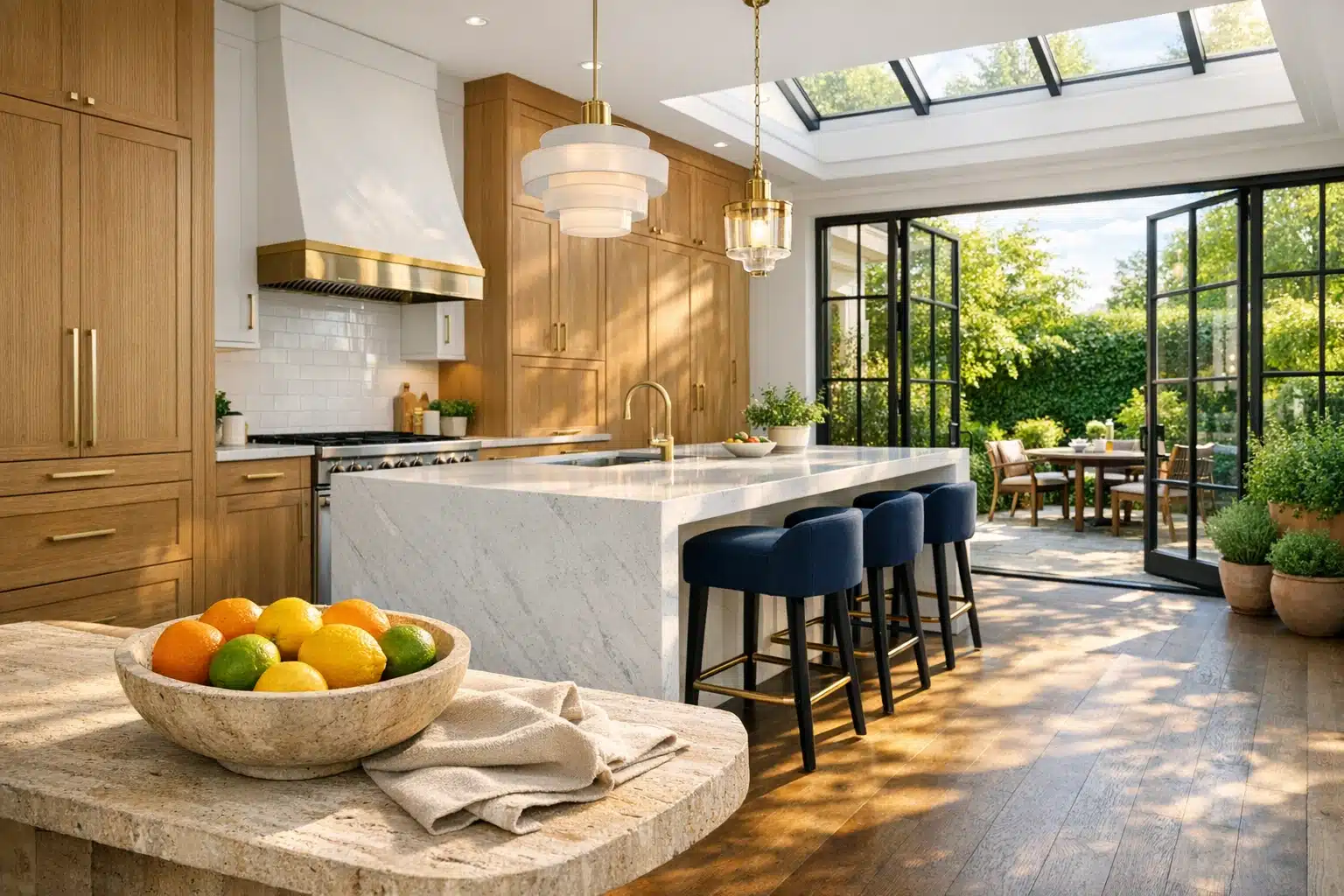
 Artificially generated image
 home renovation
Good renovation starts long before tools arrive. It begins with honest questions about how your home works today, where it frustrates you, and what kind of life you want it to support tomorrow. A brighter kitchen, quieter bedroom, smarter storage plan, or more efficient insulation can all change daily routines in measurable ways. This article walks through the major decisions so you can spend with purpose, build with fewer surprises, and finish with a home that feels truly lived in.
Outline of the article:
- Setting goals, budget limits, and renovation priorities
- Choosing the right scope for small updates and larger remodels
- Selecting materials, layouts, and design direction
- Hiring professionals, reviewing bids, and managing contracts
- Navigating construction, final checks, and closing with confidence
1. Planning the Project: Goals, Budget, and Smart Priorities
The earliest stage of a renovation often feels the least exciting, yet it has the greatest influence on the final result. Paint colors and tile samples may grab attention, but successful projects are usually built on quieter work: measuring rooms, listing frustrations, estimating costs, and deciding what matters most. Before any walls are opened, write down the reasons behind the project. Are you renovating to improve daily function, prepare for resale, reduce maintenance, or make space for a growing household? A clear answer changes every choice that follows.
Many homeowners collect inspiration first, and that can be useful if it is done thoughtfully. The strongest home renovation ideas are not simply pretty images copied from a screen; they are solutions shaped by real habits. A family that cooks every night will value workflow and storage differently than someone who rarely uses the kitchen. A remote worker may need acoustic privacy more than a dramatic entryway. When the plan reflects actual routines, the renovation feels less like decoration and more like problem-solving.
A workable budget should be detailed enough to prevent wishful thinking. Instead of using one round number, divide costs into categories such as labor, materials, permits, design fees, temporary living expenses, and contingency. A reserve of 10 to 20 percent is commonly recommended because hidden issues are not rare, especially in older homes. Water damage behind tile, outdated electrical panels, uneven floors, or insufficient framing can add cost very quickly once demolition begins.
- Separate needs from wants before pricing anything
- Research permit requirements early
- Build a contingency fund before choosing luxury finishes
- Compare the cost of repair versus replacement for each element
It also helps to define priorities in tiers. Tier one includes items tied to safety, building performance, and daily function, such as roofing, plumbing, ventilation, insulation, and layout improvements. Tier two covers durability and long-term value, such as better windows, quality flooring, or cabinets that maximize storage. Tier three contains aesthetic upgrades that can often be adjusted later without damaging the larger plan. Think of it like packing for a long journey: first you bring what keeps you going, then what makes the trip smoother, and finally what adds delight. Renovation works the same way. Clarity at the start protects both money and momentum when decisions become harder later on.
2. Defining the Right Scope: From Focused Updates to Whole-Home Change
One of the biggest decisions in any remodel is not what to install, but how much to change at once. Some owners begin with a single room and discover that adjacent problems demand attention too. Others plan an ambitious whole-house overhaul, only to realize that certain spaces function well enough to leave alone. Choosing the right scope is a balancing act between budget, disruption, and long-term goals.
A Small home renovation can be the smartest path when the budget is limited, the household is still living in the property, or the main issues are concentrated in one area. Updating a bathroom with better lighting, improved ventilation, and moisture-resistant materials may offer more practical benefit than touching five rooms halfway. Likewise, replacing worn kitchen storage, reworking a cramped entry, or improving attic insulation can deliver strong everyday value without turning the entire house into a construction zone.
By contrast, broader renovations make sense when systems are aging at the same time or when the layout no longer supports the way the home is used. If electrical wiring is outdated, plumbing lines are failing, and the floor plan traps light instead of spreading it, doing everything in phases can sometimes cost more in the long run. Each phase may require separate demolition, new permits, repeated labor setup, and recurring disruption. In those cases, a larger project can be more efficient even if it looks intimidating at first glance.
Homeowners should compare scope using three filters:
-
Function: Which spaces create the most friction every day?
-
Cost efficiency: Which tasks become cheaper when completed together?
-
Disruption: How much noise, dust, and downtime can the household realistically absorb?
Older houses deserve special care during this stage. Opening one wall may reveal insulation gaps, obsolete wiring, or structural changes made decades earlier. That does not mean old homes are poor renovation candidates; it means planning must be more investigative. Site visits, moisture checks, and careful measurement reduce the chance of expensive surprises. It is often wise to treat the first assessment like reading the opening chapter of a mystery novel: clues are everywhere, but they only matter if someone slows down enough to notice them.
A room-by-room plan is useful even for full remodels. It helps owners decide what must happen first, what can wait, and what should be left untouched because it still performs well. Scope discipline is not about reducing ambition. It is about giving ambition a structure strong enough to survive real-world constraints.
3. Materials, Layout, and Design Choices That Hold Up Over Time
Once the project scope is clear, design decisions move to the foreground. This is where many renovations either gain coherence or drift into a patchwork of mismatched choices. The best results come from balancing appearance with durability, maintenance, light, comfort, and proportion. A room should not only photograph well on the day it is finished; it should also feel good on a rushed weekday morning, a rainy Sunday afternoon, and a busy holiday evening when every seat is taken.
Start with layout before selecting finishes. A better path through a kitchen, more usable clearance around a bed, or storage placed where clutter naturally gathers will usually improve quality of life more than an expensive surface upgrade. In practical terms, this means studying movement. Where do people stop, turn, drop bags, prep food, charge devices, or search for socks? Renovation becomes more intelligent when it follows real behavior instead of abstract trends.
The phrase home renovation style often leads people straight to visuals, but style is more effective when it is treated as a framework rather than a costume. A warm modern approach, for example, may combine simple cabinet fronts with natural wood, soft lighting, and a restrained palette. A classic approach may rely on symmetry, painted millwork, and timeless tile patterns. Neither is inherently better. The stronger choice is the one that suits the architecture of the home and the people living inside it.
Material comparisons matter because beauty and maintenance are closely linked:
-
Quartz counters are low-maintenance and consistent, while natural stone offers character but may require more care.
-
Engineered wood handles some environments better than solid hardwood, though it can be less forgiving when deeply damaged.
-
Luxury vinyl plank can be practical in high-traffic areas, while tile may outperform it in wet rooms.
-
Matte finishes hide fingerprints better than glossy ones in many everyday settings.
Energy performance also deserves a place in design conversations. Better insulation, sealed gaps, efficient windows, and layered lighting can improve comfort without changing the home’s personality. Light should be planned in layers: ambient for general visibility, task lighting for work zones, and accent lighting for mood or display. This is where renovation begins to feel less like construction and more like composition. Walls, floors, hardware, and fixtures become instruments in the same piece of music. When they are tuned to one another, the home feels settled rather than staged.
Good design is rarely about doing more. It is about choosing fewer things with better reasons behind them, then arranging those choices so the house becomes easier to use and nicer to return to at the end of the day.
4. Hiring the Right Professionals and Comparing Bids Carefully
Even a well-planned renovation can go off course if the team is poorly chosen. Hiring professionals is not just about finding someone available; it is about finding people whose communication, documentation, technical ability, and process fit the complexity of the job. A skilled home renovation Contractor should be able to explain sequencing, identify likely risks, discuss permits, outline a payment structure, and speak clearly about what is included and what is not. If answers stay vague during the bidding stage, confusion usually grows once work begins.
It is wise to interview more than one firm, especially when the project involves structural changes, electrical work, plumbing relocation, or custom fabrication. Homeowners often compare price first, but the real comparison should include scope, allowances, schedule assumptions, site supervision, cleanup expectations, and change-order procedures. Two bids may look similar at a glance while covering very different levels of work. One may include disposal, finish carpentry, and permit handling. Another may leave those items out, making the lower number less meaningful than it appears.
When reviewing home renovation companies, look beyond polished photos. Ask for references from recent clients, proof of insurance, license details where required, and examples of projects with a similar level of complexity. Visit completed work if possible. A contractor’s website can tell you how the company markets itself; a past client’s experience tells you how the company behaves when problems arise.
- Request an itemized proposal
- Confirm who supervises the site each day
- Ask how delays, substitutions, and hidden conditions are documented
- Read warranty language carefully
- Make sure payment milestones are tied to progress, not vague dates
The contract should protect both sides. It should define demolition limits, materials, timeline expectations, payment schedule, responsibility for permits, and the process for approving changes. This is not mistrust; it is structure. Construction involves dozens of moving parts, and written clarity reduces costly misunderstandings.
Communication habits are equally important. Some teams use weekly site meetings and written updates. Others rely on text messages and quick calls. Neither method is automatically wrong, but the system should be consistent. The best renovation relationships usually feel calm rather than dramatic. Questions are answered, issues are documented, and decisions are made before they become emergencies. In a process where dust, noise, and delay can easily erode patience, professional steadiness is not a luxury. It is part of the service you are hiring.
5. Conclusion for Homeowners: Managing the Build, Final Checks, and a Better Finish
Once construction starts, renovation becomes less theoretical and far more physical. Schedules shift, access routes change, dust travels farther than expected, and everyday routines are rewritten around deliveries, temporary kitchens, or unavailable bathrooms. This is the stage where homeowners benefit most from preparation that seemed boring at the start. Labeling storage, protecting valuables, planning pet care, setting decision deadlines, and identifying a backup budget all make the build easier to navigate.
Living through the project requires realism. Staying in the home can save money, but it often increases stress, especially during work involving plumbing shutdowns, major flooring replacement, or whole-house painting. Moving out for a short period may cost more upfront while reducing lost time, decision fatigue, and wear on family routines. Neither option is universally correct. The right choice depends on project scale, household needs, and how much disruption people can tolerate without burning out.
As work nears completion, attention should shift to quality control. Final stages deserve the same focus as demolition and rough work. A punch list helps track incomplete items, touch-ups, alignment issues, missing hardware, paint flaws, and fixture testing. Walk through the space in daylight and again at night. Open drawers, run taps, test outlets, inspect caulk lines, and check doors for smooth operation. Little issues are easier to correct before the crew and tools disappear.
- Keep all manuals, paint codes, warranties, and receipts in one folder
- Photograph finished walls and utility locations for future reference
- Confirm final inspections are completed where required
- Ask for maintenance advice for stone, wood, tile, and specialty finishes
For homeowners, the real measure of success is not whether the project looked impressive on reveal day. It is whether the home functions better six months later, whether storage is easier to use, whether rooms feel calmer, and whether maintenance has become simpler rather than harder. A thoughtful renovation should support ordinary life with less friction. That may mean fewer dramatic features and more invisible improvements, but those quiet gains often matter most.
If you are planning your first remodel or preparing for another one, take this as the central lesson: define the purpose, choose the scope with discipline, hire carefully, and finish with patience. Renovation is rarely a straight line, yet it can still be a rewarding one. When each decision is tied to how you truly live, the result is more than an upgraded property. It becomes a home that finally works the way it should.